A trader can have a profitable strategy and still lose a trading account if they fail to control drawdown.
Many traders focus on profits first. They look at account growth, winning trades, and return percentages. However, drawdown often determines whether a trading approach can survive through losing periods.
For retail traders, drawdown helps measure risk exposure. For prop firm traders, it can decide whether an account remains active or violates account rules.
Understanding drawdown is not only about knowing how much money has been lost. It is about understanding how losses affect your ability to continue trading.
What is Drawdown in Trading?
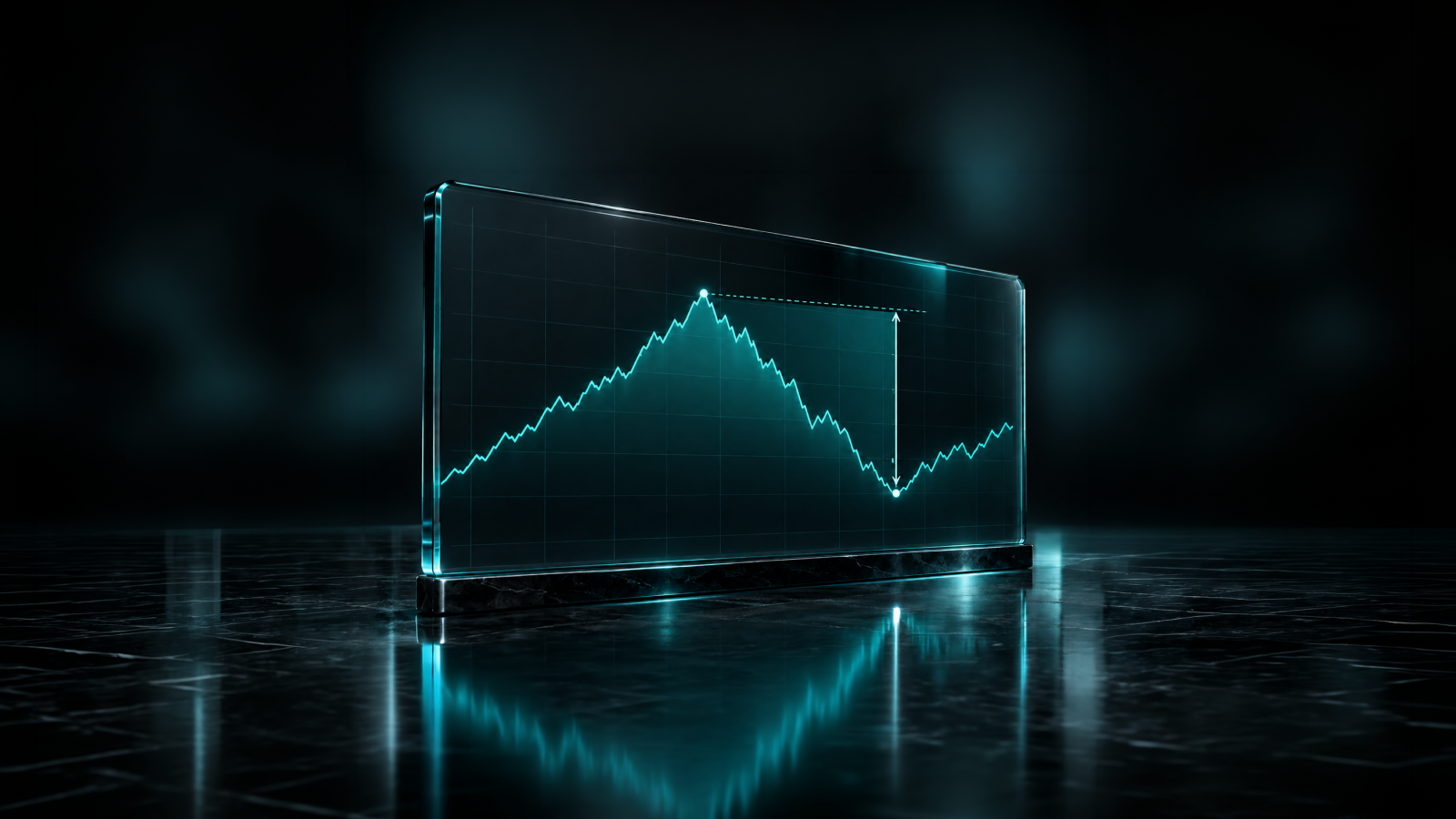
Drawdown in trading measures the decline in an account’s value from a previous peak before a recovery.
It shows the distance between an account’s highest point and its lowest point during a losing period.
For example:
- A trader starts with a $50,000 account.
- The account grows to $55,000.
- Later, the balance falls to $52,000.
The drawdown from the peak is $3,000.
Percentage drawdown:
($55,000 - $52,000) ÷ $55,000 × 100 = 5.45%
Drawdown gives traders a clearer view of risk than looking at individual losing trades.
One losing trade usually does not have a major impact. However, multiple losses over time can create a large drawdown, which may affect your future trading decisions, position size, and ability to continue trading.
Why is Drawdown Important for Traders?
Drawdown shows how much pressure a trading strategy creates during difficult periods.
Two traders can achieve similar returns but have very different risk profiles.
Example:
Trader A and Trader B both generated a 20% return, but their risk exposure was different. Trader A achieved this return with a maximum drawdown of 5%, meaning the decline from peak to lowest point was relatively limited.
In comparison, Trader B experienced a 25% maximum drawdown while achieving the same return, indicating significantly higher fluctuations and greater risk taken to reach the result.
Both traders generated the same return, but Trader B experienced a much larger decline before reaching that result.
A higher drawdown can create several challenges:
- Larger recovery requirements
- Increased emotional pressure
- Reduced available capital
- Higher chance of breaking trading rules
For prop traders, drawdown is even more important because most funded accounts include specific loss limits.
How is Drawdown Calculated?
The basic drawdown formula is:
Drawdown % = (Peak Account Value - Current Account Value) ÷ Peak Account Value × 100
Example:
A trading account reaches a peak of $100,000.
The account later falls to $90,000.
Drawdown: ($100,000 - $90,000) ÷ $100,000 × 100 = 10%
The account is currently experiencing a 10% drawdown from its previous high.
However, different brokers and prop firms may calculate drawdown differently. Traders should always check the exact method used by the account provider.
Types of Drawdown Traders Should Understand
1. Balance Drawdown
Balance drawdown measures losses based on closed trades.
Example:
A trader closes several losing trades and the account balance decreases from $10,000 to $9,000.
The balance drawdown is 10%.
This calculation does not consider open positions.
2. Equity Drawdown
Equity drawdown includes both closed trades and current open positions.
If a trader has open trades showing unrealised losses, equity drawdown reflects that decline.
Example:
Account balance: $10,000
Open trade loss: $500
Current equity: $9,500
The equity drawdown is 5%.
Equity drawdown can show risk earlier because it reflects current exposure.
3. Maximum Drawdown
Maximum drawdown measures the largest decline between an account peak and the lowest point reached afterward.
It helps traders understand the worst historical loss period of a strategy.
Many traders and prop firms use maximum drawdown as a major risk measurement.
4. Daily Drawdown
Daily drawdown focuses on losses within a single trading day.
Many funded trading programs use daily loss limits to prevent traders from taking excessive risk during one session.
A trader may have an overall drawdown limit and a separate daily drawdown limit.
A trader may avoid the daily limit but still approach the maximum drawdown limit over time.
Understanding both limits helps traders plan position sizes and avoid unexpected account violations.
Why Profitable Traders Still Fail Due to Drawdown?
A profitable trading system does not guarantee smooth results.
Markets move through different conditions. A strategy that performs well during one period may experience a losing phase later.
Common reasons traders experience excessive drawdown include:
1. Increasing position size after losses
Some traders increase their trade size to recover losses faster.
This can make a normal losing period much harder to recover from.
2. Ignoring losing streaks
Even strategies with positive historical performance can experience multiple losses in a row.
A trader needs a risk plan that can handle these periods.
3. Focusing only on profit targets
Some traders aim for account growth without considering how much risk they take to achieve it.
A large return with a large drawdown may create problems, especially in funded accounts with strict rules.
How Can Traders Manage Drawdown?
Drawdown cannot be completely removed. Every trading strategy experiences losing periods.
The goal is to keep losses within a level that matches your account rules and trading approach.
Some practices traders use include:
1. Define risk before entering a trade
Decide the maximum acceptable loss before opening a position.
This helps avoid changing decisions after a trade moves against you.
2. Monitor account exposure
Traders managing multiple accounts may need to track risk across each account instead of viewing every account separately.
A single strategy copied across several accounts can create larger combined exposure.
3. Review drawdown patterns
Look at:
- When losses happen
- Which strategies create larger declines
- Whether losses come from market conditions or execution decisions
Understanding the source of drawdown can help traders adjust their process.
How Does Drawdown Matter for Multi-Account Traders?
Managing multiple trading accounts creates another layer of risk.
A trader may have:
- Several prop firm accounts
- Multiple broker accounts
- Different strategies running at the same time
Without proper tracking, the same trade idea may create repeated exposure across accounts.
For example, a trader copying the same position across five accounts may experience a larger combined loss if the trade moves against them.
Traders Connect provides tools such as Copier and Analyzer that help traders connect accounts, review performance data, and monitor trading activity across supported platforms.
For traders handling multiple accounts, tracking drawdown across the complete account structure can provide a clearer view of overall risk.
Drawdown Mistakes Traders Should Avoid
Looking only at profit percentage - A high return does not show how much risk was taken to achieve it. Always review returns together with drawdown.
Ignoring open losses - Equity drawdown can reveal risk before losses become closed trades.
Treating every account the same - Different prop firms and brokers may use different drawdown calculations and rules. Always check account conditions.
Using the same risk after a losing period - A drawdown period may require reviewing position size and trading frequency.
Conclusion
Drawdown shows how a trading strategy behaves during difficult periods.
A trader who understands drawdown can make better decisions about position size, account selection, and risk management.
For traders managing multiple accounts, tracking drawdown across their complete trading activity can help create a clearer view of exposure.
Traders Connect provides account management and analysis tools designed for traders who need visibility across connected trading accounts and performance data.
FAQs about Drawdown in Trading
Q1. What is a good drawdown percentage in trading?
A. There is no fixed percentage that works for every trader. Acceptable drawdown depends on strategy type, risk tolerance, account rules, and trading objectives.
Q2. Is drawdown the same as losing money?
A. Drawdown measures the decline from an account peak. It can include unrealised losses depending on the calculation method.
Q3. How do prop firms calculate drawdown?
A. Each prop firm can use different rules. Some calculate drawdown from balance, while others consider equity or specific daily limits.
Q4. Can traders recover from drawdown?
A. Yes, recovery is possible, but the percentage loss determines how difficult recovery becomes. Larger losses require a larger percentage gain to return to the previous peak.
Q5. Why is maximum drawdown important?
A. Maximum drawdown shows the largest decline experienced during a trading period. It helps traders understand strategy risk and account conditions.